Start here: 500 g of brew water
This is an editorial starting recipe, not a claim of taste testing. It makes roughly 430 ml of coffee, enough for two small cups. A 500 g water recipe does not fill two 250 ml mugs: some water stays with the grounds.
Use a press with room for the water, coffee and headspace, a kettle, timer and coarse-ground coffee. A scale makes the recipe repeatable; a plastic or wooden spoon avoids knocking glass. A 1 litre press comfortably accommodates this batch. Check the maximum fill level on smaller presses.
| Variable | Starting point |
|---|---|
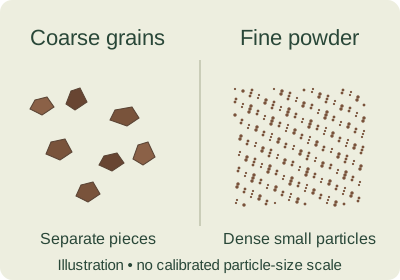
| Coffee | 33.3 g, coarse; recognizable grains rather than powder |
| Brew water | 500 g; coffee:water = 1:15 |
| Water temperature | 94°C / 201°F, or hot water allowed to come off the boil |
| Time | 4 minutes steeping, then about 30 seconds to press |
| Expected drink | About 433 ml using a rough 2 g water retained per gram of coffee |
| Active work | About 2 minutes, plus cleanup |
The everyday four-minute method
Start the timer when water first meets coffee. Keep the press on a stable, heat-resistant surface throughout. The steps below use one initial mix; repeated stirring at the end makes sediment harder to avoid.
- Check the beaker for damage and the mesh for correct assembly. Warm the press with a little hot water, then empty it.
- Add 33.3 g coffee. Tare the scale and pour 500 g water, wetting all the grounds. Do not exceed the press's fill limit.
- Give one gentle stir with a utensil suitable for the beaker. Fit the lid with the filter above the liquid; close or lock it as your model directs.
- Wait until 4:00. Hold the handle, point the spout away from you and lower the plunger slowly with light hand pressure.
- Stop if resistance becomes strong. Do not lean on the plunger. Carefully lift it, stir and retry gently only as the manufacturer's instructions allow; otherwise let the coffee cool before clearing the obstruction.
- Pour all the drink into cups or a serving jug. Leave the last muddy spoonful behind if clarity matters more than maximum yield. Let the drink cool to a comfortable sipping temperature.
Evidence: Bodum French press instructions and scald precautions (manufacturer manual)
A slower option for a cleaner cup
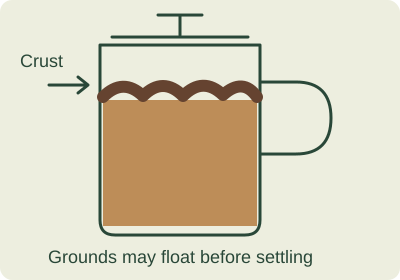
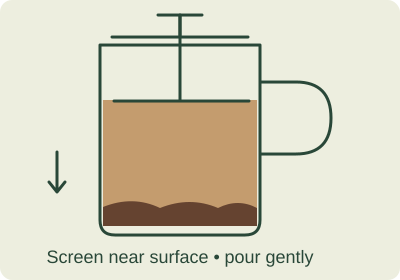
For the same dose, water and temperature, wait four minutes, gently break the floating crust once, and skim loose foam if you wish. Replace the lid and leave the coffee undisturbed for another five minutes. Lower the screen only enough to help retain floating particles and pour slowly without squeezing the bed.
This settling approach trades speed and heat for less grit; it does not turn a mesh-filtered drink into paper-filtered coffee. Pouring the very last liquid will reintroduce more fines. If you dislike all sediment, choose a paper-filtered immersion brewer such as a Switch or Clever instead.
Evidence: BrewRatio: French press methods and settling option
Choose poured water or a finished drink
For brew-water input, divide water by 15. For a target finished volume, an approximate model is: coffee = finished ml ÷ (15 − retention), then water = coffee × 15. Here retention means grams of water left behind per gram of dry coffee; 2 is a planning assumption, not a measurement of your press.
Weigh or measure your actual decanted batch once and record it. Leaving extra sediment behind lowers yield further. If a planned batch exceeds the safe fill level, brew twice or use a larger press.
| What you want | Coffee | Brew water | Estimated finished drink |
|---|---|---|---|
| 250 g water poured | 16.7 g | 250 g | 217 ml |
| 500 g water poured | 33.3 g | 500 g | 433 ml |
| 500 ml finished coffee | 38.5 g | 576.9 g | 500 ml |
| 750 g water poured | 50 g | 750 g | 650 ml |
Let the problem choose the adjustment
Taste after the coffee cools a little. A stronger drink is not necessarily a better-extracted drink. Keep the coffee, water and timing the same while testing a grind change; keep grind and timing the same while testing strength.
| Observation | First controlled test | What stays fixed |
|---|---|---|
| Balanced but too weak | Use 35.7 g coffee with the same 500 g water (1:14). | Grind, temperature and steep. |
| Balanced but too heavy | Add a little hot water to this cup; next time try 1:16. | Do not change grind just to dilute. |
| Sharp or sour, little sweetness | Try a slightly longer steep first; if unchanged, one small finer adjustment that still meets your press manual's coarse-grind guidance. | Dose and water. |
| Dry, harsh or bitter | Try less agitation; if the roast itself tastes smoky, try a different roast rather than chasing the timer. | Ratio. |
| Gritty cup | Use the settling option, a gentle pour and leave more liquid behind; inspect damaged or misplaced mesh. | Coffee recipe. |
| Stiff plunger | Stop pressing. Check grind and assembly only after safely handling or cooling the brew. | Never increase force. |
| Flat or stale flavor | Clean the filter assembly, then compare fresher coffee and fresh potable water. | Do not change several brew settings at once. |
Pre-ground coffee, milk and no scale
Ask for a coarse French press grind when buying ground coffee. General supermarket filter grind may create more sediment or press resistance; do not use espresso-fine powder in a press whose instructions require coarse coffee.
Without a scale, keep one particular spoon and one marked jug consistent. A rounded tablespoon is a rough portion, not a fixed gram weight: beans, roast and grind change its mass. Start from your press maker's scoop guidance and change by a small spoonful after tasting. Note your chosen water mark rather than calling every mug one cup.
For milk, start with the same recipe and add a measured splash in the cup. If it disappears behind the milk, increase coffee a little next time; grinding much finer merely to increase strength can make pressing difficult. For an iced drink now, use the separate iced-coffee guide rather than pouring a full-strength hot mug onto an unmeasured mountain of ice.
Clean the mesh, not only the jug
Once cool, scoop grounds into the appropriate local waste stream. Disassemble the filter as your manual permits; oils and small particles collect between the mesh and support plates. Wash with the permitted cleaner, rinse well, dry and reassemble in the right order. Check that the screen reaches the wall evenly.
Do not assume every decorative finish or lid can go in a dishwasher. Stop using chipped, cracked or badly scratched glass and replace the damaged part. A lingering stale smell after rinsing is a reason to clean more thoroughly, not to leave an intentional coffee coating.
Evidence: Bodum French press instructions and scald precautions (manufacturer manual)
Sources & limitations
This guide combines source-based explanations and practical starting points. Coffee Jacob has not performed hands-on product testing or controlled tasting trials for this guide. Source check: 13 October 2026.